Peter Kortvel // PMM & GTM
01 / INTRO

Works.

I'll walk you through each one: the problem we were solving, how I thought about it, what we shipped, and the results.

I'm a builder. I get into the 'why' before solutions, and I strip a product to its core logic before I dress it up. Most of the projects below started messy – unclear buyer, unclear category, unclear 'why now'. When things start fitting together in their simplicity, I know we're on the right path.

Pick a tag to filter by project type, or scroll the whole thing.

By topic 15 projects shown
By company
/01
Scandit
ID SCANNING LAUNCH · 2021–2022
Launches Positioning Demo & video Developer

A leading barcode company launches into an adjacent identity market – and needs two stories.

Problem

Scandit's barcode scanning was a category leader. ID scanning was adjacent in tech but very different in buyer, use case, and competition. We recognized two very different persona categories: developers / technical buyers, and industry operations.

Thinking

For the dev/tech persona we stayed clear and to the point – capabilities, tech differentiation, integration options, simplicity.

For the industry ops persona we focused on the jobs-to-be-done of each industry and use case – airlines, logistics, post & parcel, retail. We mapped the problems we solve in each industry and the real workflows we improve.

What shipped

Positioning by persona, vertical messaging, sales enablement, launch video, web pages, demo experience.
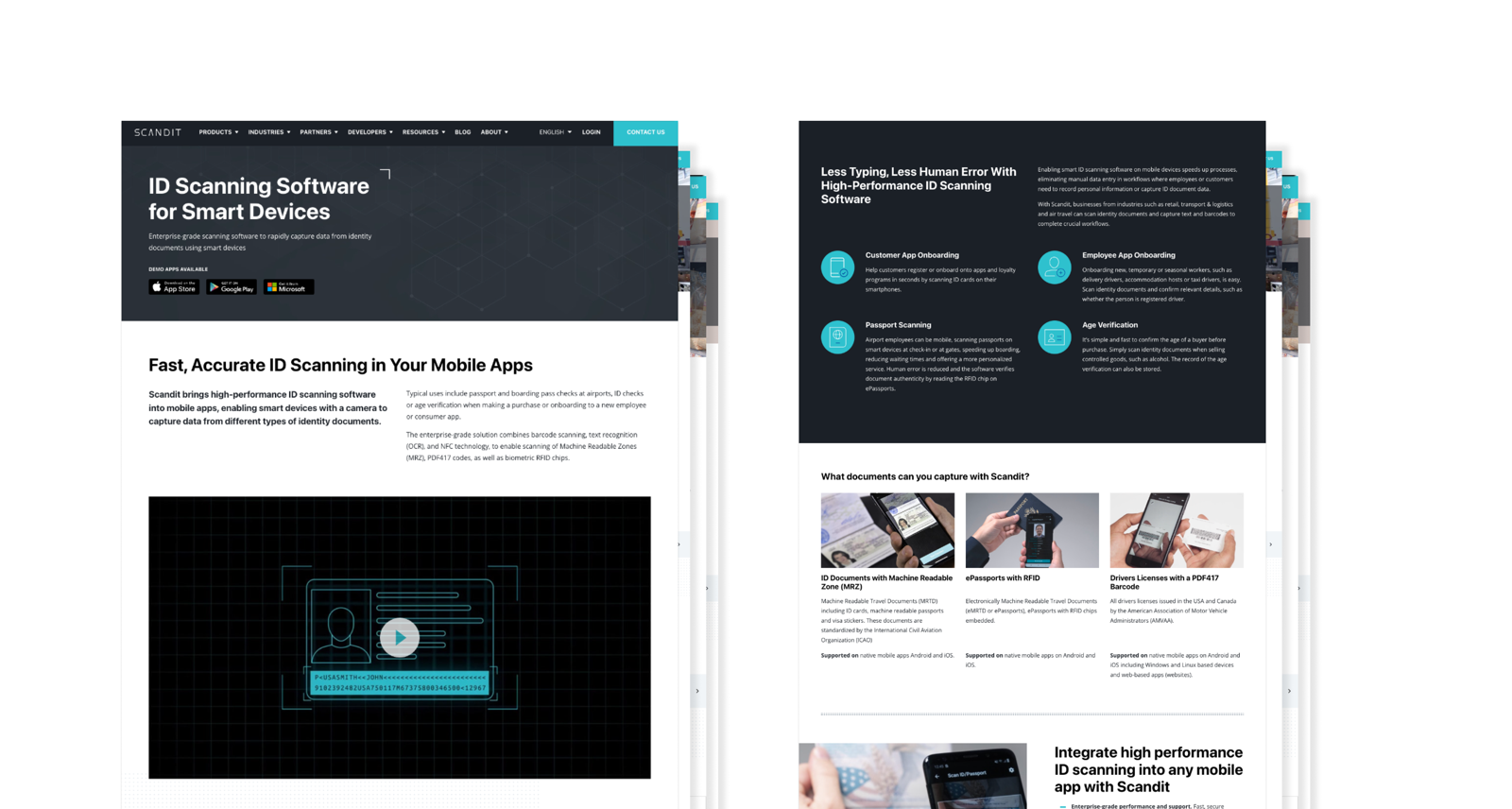
Scandit ID Scanning launch – positioning across developer and industry personas

Now Scandit's second most successful product.
/02
Scandit
VERTICAL POSITIONING STRATEGY · 2019–2024
Positioning GTM Content & web Developer

Pivot the GTM: from selling an SDK to developers, to selling outcomes per industry.

Problem

Scandit's growth had been SDK-to-developers. The strategic shift was to lead with industries and use cases instead – retail, post & parcel, logistics, field service, air travel, healthcare. Each backed by a real customer JTBD.

Thinking

Researched each vertical with product, sales, and customers. Translated findings into tailored positioning and messaging per industry. Built use cases that the buyer recognised in their own workflow.

Then partnered with content, design, and sales to turn each vertical's positioning into a full asset stack: web pages, whitepapers, videos, pitch decks, sales enablement.

What shipped

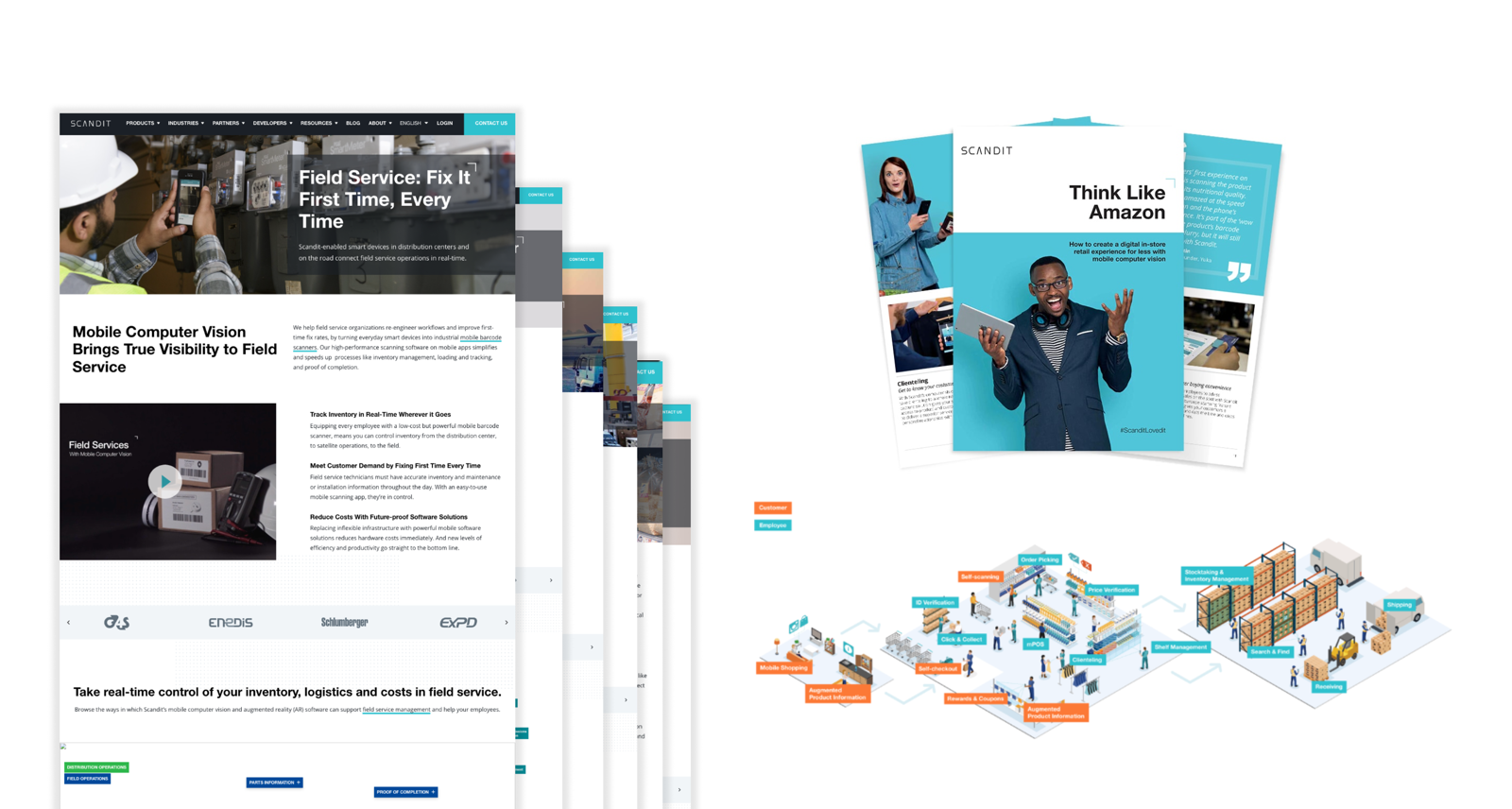
Vertical web pages and messaging across retail, post & parcel, logistics, field service, air travel, healthcare. Whitepapers (incl. retail's "Think Like Amazon"). Industry "dollhouse" visuals mapping use cases across operations. Vertical pitch decks. Sales enablement per industry.

Industry-focused GTM – vertical positioning across retail, logistics, post & parcel, field service, air travel, healthcare

Vertical-led GTM became Scandit's core growth motion.

/03
Scandit × Samsung
PARTNER LAUNCH VIDEO · 2022
Demo & video Positioning

How do you call something "old" without insulting the buyer still using it?

Problem

As a Samsung solution partner, we needed content Samsung's reps would actually use. Both teams wanted to show that barcode scanners are old and clunky for retailers – and shift perception toward smartphones. The risk: the negative framing would stick to our own brands too.

Thinking

Found a visual and narrative reference that flipped the frame: retro. Instead of calling smartphone scanners "old", we called them retro – memorable, slightly humorous, no insult. The retailer doesn't have to defend their past choice to consider a new one. Packed the video with real examples where smartphones beat scanners.

What shipped

Co-produced launch video, split-budget production, joint distribution through Samsung sales channels.

Distributed through Samsung's channels. The "retro" frame stuck in conversations.

/04
Scandit
SHELFVIEW LAUNCH · 2023
Launches Demo & video Positioning

A new product line for Scandit – and a whole new category to explain in one short video.

Problem

ShelfView was a completely new product line: shelf computer vision intelligence for retailers. We had to build trust, beat competitors on visual quality, and educate the market on a category Scandit hadn't been known for – in a short runtime.

Thinking

Narrowed the value prop to the few elements that resonated. Mixed three modes: technical animation (the how), retail store scenes (the problem), and on-camera presence from two Scandit team members and one customer (solution and trust). Skipped voice-over – let the people speak. The mix made it engaging without diluting the message.

What shipped

Launch video, supporting positioning, web content, sales materials for the new category.

Launched ShelfView with a market-leader look in a category Scandit hadn't owned before.

/05
Scandit
VIDEO STORYTELLING · 2018–2025
Demo & video Positioning Content & web

How do you align a whole company on something as opinionated as a video?

Problem

I produced 100+ product videos. Early on, one came back from the shoot, the CPO watched the final cut, and said he didn't like the intro.

Video is opinionated, and there are a lot of stakeholders. If you don't manage that, a project would turn into a committee that waters everything down.

Thinking

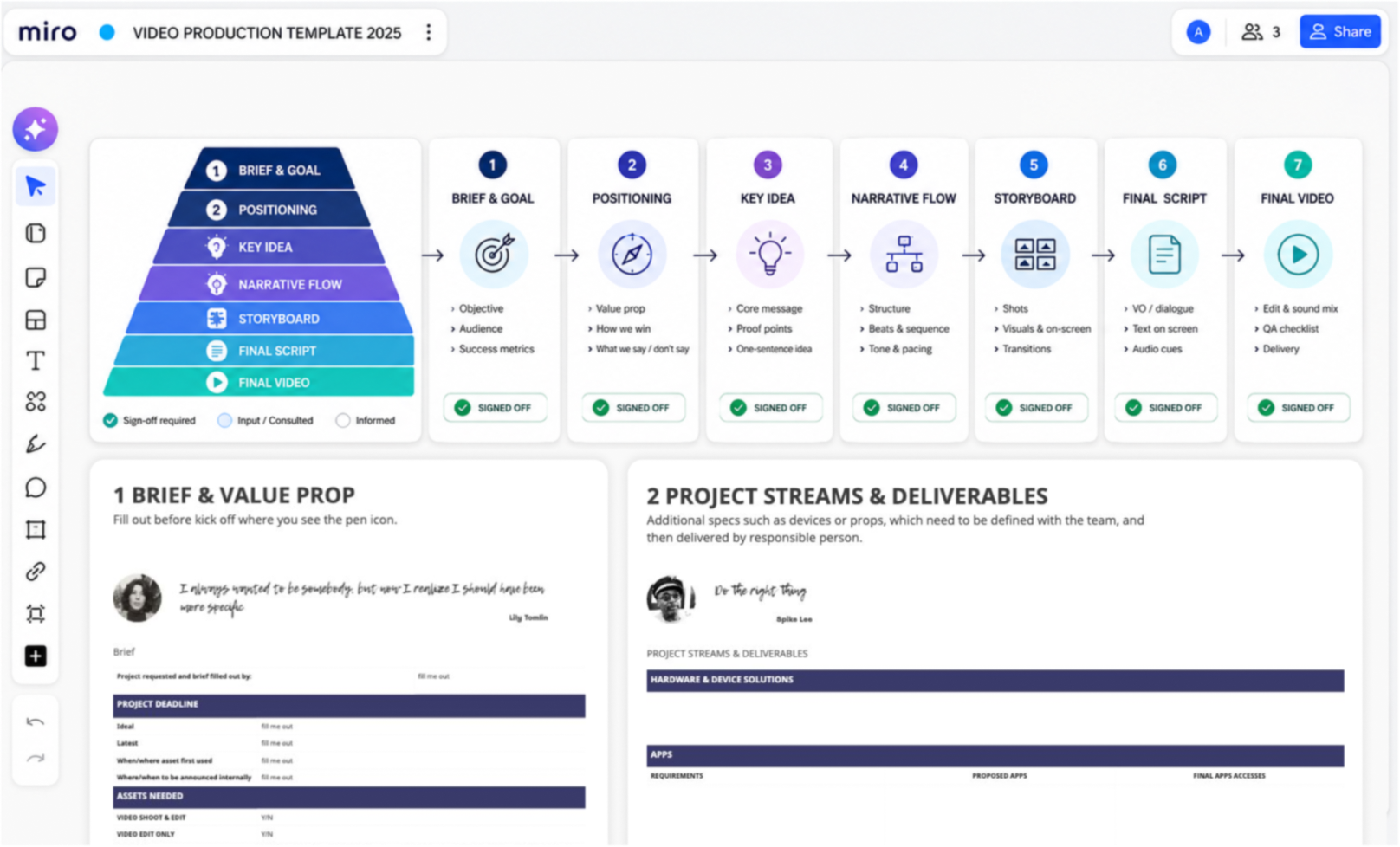
I built a staged sign-off system – a pyramid. Each stage got signed off before it fed the next: brief & goal → positioning → key idea → narrative flow → storyboard → final script → final video. A RACI table made it clear who approves and who's just informed and doesn't need to weigh in.

So when someone asked late "why aren't we saying benefit X in the intro?", I pointed back to the positioning we'd already agreed. It killed group conformity and late rewrites – and let us ship punchy, strong videos instead of safe mush.

What shipped

100+ product videos across launches, web, sales decks, events, and analyst briefings. A repeatable staged process and RACI other teams reused.

Staged video sign-off system – a pyramid from brief and positioning through to final video, with a RACI table

Videos shipped fast and on-message, without committee dilution. Became Scandit's specialist for visual tech storytelling at scale.

/06
Scandit
DEVELOPER-PERSONA PMM · 2018–2024
Developer Positioning Demo & video Content & web

You can't push an SDK at developers. They reach for one only when they need it – so you win the moment they evaluate.

Problem

Selling a computer vision SDK to developers breaks the usual playbook. Most things you can create demand for – show someone the right ad and they might buy. An SDK isn't like that. A developer reaches for one only when they hit a real need, runs a quick test, and moves on. And computer-vision quality is notoriously hard to understand – you can't just claim performance, you have to prove it. The job is to be useful, and technically honest, at the few moments they're paying attention.

How I approached it

I built PMM around the moments they care about – evaluating, integrating, and shipping into the real world. Four moves, each one earning trust by being useful and technically honest...

1 · Educate

Devs assume "if it scans on my desk, it works." It doesn't. I made the real-world gap impossible to ignore. See the project →

2 · Prove

No adjectives. Measured, side-by-side proof against the exact tools devs were comparing us to. See the project →

3 · Inform

A complex SDK, tangled integration paths, and dense releases – made clear in seconds, in a look devs respect. See the project →

4 · Let them try

Hands-on demo apps and books, so devs feel the product in their own setting before writing a line of code. See the project →

A developer motion built on trust – the proof assets sales couldn't live without, and the base under Scandit's developer-plus-enterprise growth.

/07
Scandit
DEVELOPER EDUCATION · 2021–2024
Developer Demo & video Positioning

How to sell developers something they think they can build themselves.

Problem

As Scandit moved from an SDK to offering ready-built UX data-capture solutions, we hit a mindset problem: developers thought they could build the capture experience themselves – and did, but without real-world UX testing. From the desk it worked – job done. In the field the real user experience was bad, and developers never found out.

Thinking

These teams don't run real usage tests, so the gap was invisible to them. It had to be felt. I sat with the UX team, pinned down the key failure areas, and built a video that mixed real human reactions, split-screen comparisons, and a clear UX teardown – simple to follow, informational, but with emotion.

What shipped

An educational video on why scanning UX matters – human reactions, split-screen comparisons, and a plain-language explanation, plus Scandit's ready-to-use UI and no-code path to getting it right without rebuilding from scratch.

We had to make it land across a range of personas – IT, operations – not just software engineers. So it explains the stakes without assuming you write code.

The personas who shape these decisions saw why real-world UX testing matters – and why a ready-built solution beats rolling their own.

/08
Scandit
COMPETITIVE PROOF · 2018–2023
Developer Demo & video Positioning Sales enablement

Computer-vision quality is almost impossible to judge from a spec sheet. So we measured exactly where we win.

Problem

Computer-vision performance is notoriously hard to understand. In a quick, clean test almost anything scans – so a free or "good enough" option can look equal to ours. Many developers were defaulting to free, open-source scanning libraries for exactly this reason: in a simple test they looked the same. The real difference only shows under pressure: scanning at sharp angles, through glare, in motion, the false positives. Numbers on a slide don't land, and most buyers never test those conditions themselves.

Thinking

So I teamed up with product engineering to pin down exactly where we win – the specific, real-world conditions that break a weaker scanner. We even built tools to measure and visualise things like scanning distance on video, then ran controlled tests to quantify the gap.

What shipped

Benchmark report. A head-to-head performance comparison against three key competitors – packaged into a report and a clean set of benchmark numbers sales could drop straight into a deal. Hard data on where we win, in the conditions that decide real deployments.

Side-by-side comparison video. We filmed our scanner head-to-head with the competitors in the same hard conditions, with the test results on screen – so the gap was visible, not just claimed.

Performance explainer video. A video that breaks down the categories of computer-vision performance and shows our CV in action across each one.

Sales got a proof point built on data – one of our strongest assets across technical, bottom-of-funnel, and developer buyers.

/09
Scandit
TECHNICAL CLARITY · 2018–2024
Developer Content & web Positioning Demo & video

A complex SDK, tangled integration paths, and marketing-speak releases – made clear in seconds.

Problem

Early on, release comms were written in marketing language that developers tuned straight out. Our integration options had grown complex and hard to understand. And releases were big and feature-dense.

What shipped

Release comms, to the point. On one of my early projects we learned marketing language didn't work here at all – so we restructured the copywriting: written by the product manager with PMM assistance, not by a marketer as before.

Integration options, made pickable. I built web pages that sorted the options by their real decision points – a matrix that made it simple to choose the right one. It took clear, simple technical thinking to present something that complex this plainly. An animated explainer, in a high-end technical look devs appreciated, backed it up and gave Scandit the feel of the best tech solution.

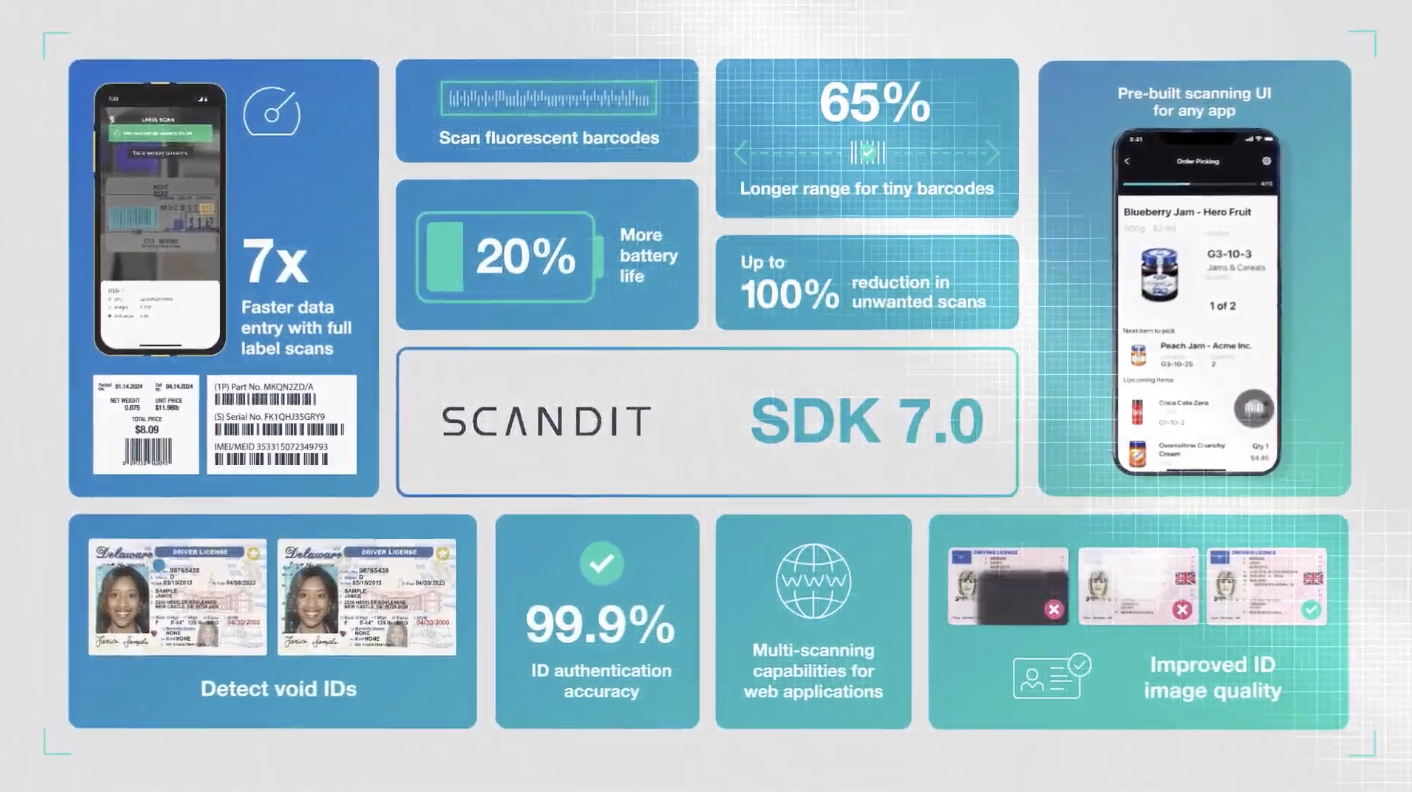
Bento-box release visual (SDK 7.0). For our big SDK 7.0 release I used a bento-box visual – Apple-style – as the hero for all the key new features, in animation and static visuals. It landed, got reused across many later releases, and spread into marketing materials.

SDK 7.0 bento-box release visual – key new features in an Apple-style grid

Complex tech developers could grasp in seconds – and a release visual the whole company kept reusing.

/10
Scandit
DEMO EXPERIENCE · 2020–2024
Demo & video Sales enablement Developer

Software that only makes sense in the real world – so we put the buyer's own workflow in their hands.

Problem

Scandit's software comes alive in the physical world – scanning real labels, AR overlays on real shelves. We learned very quickly that selling the technology and its features wasn't enough. Each persona – retail associate, field-service tech, logistics worker – needed to see their own workflow, exactly as they experience it, to connect the dots and imagine it in their facility.

Thinking

So we stopped demoing "the technology" and started demoing the buyer's day. We designed every experience around each industry's real tasks and the exact information a worker sees on the job – before they ever tested it in their own facility.

What shipped

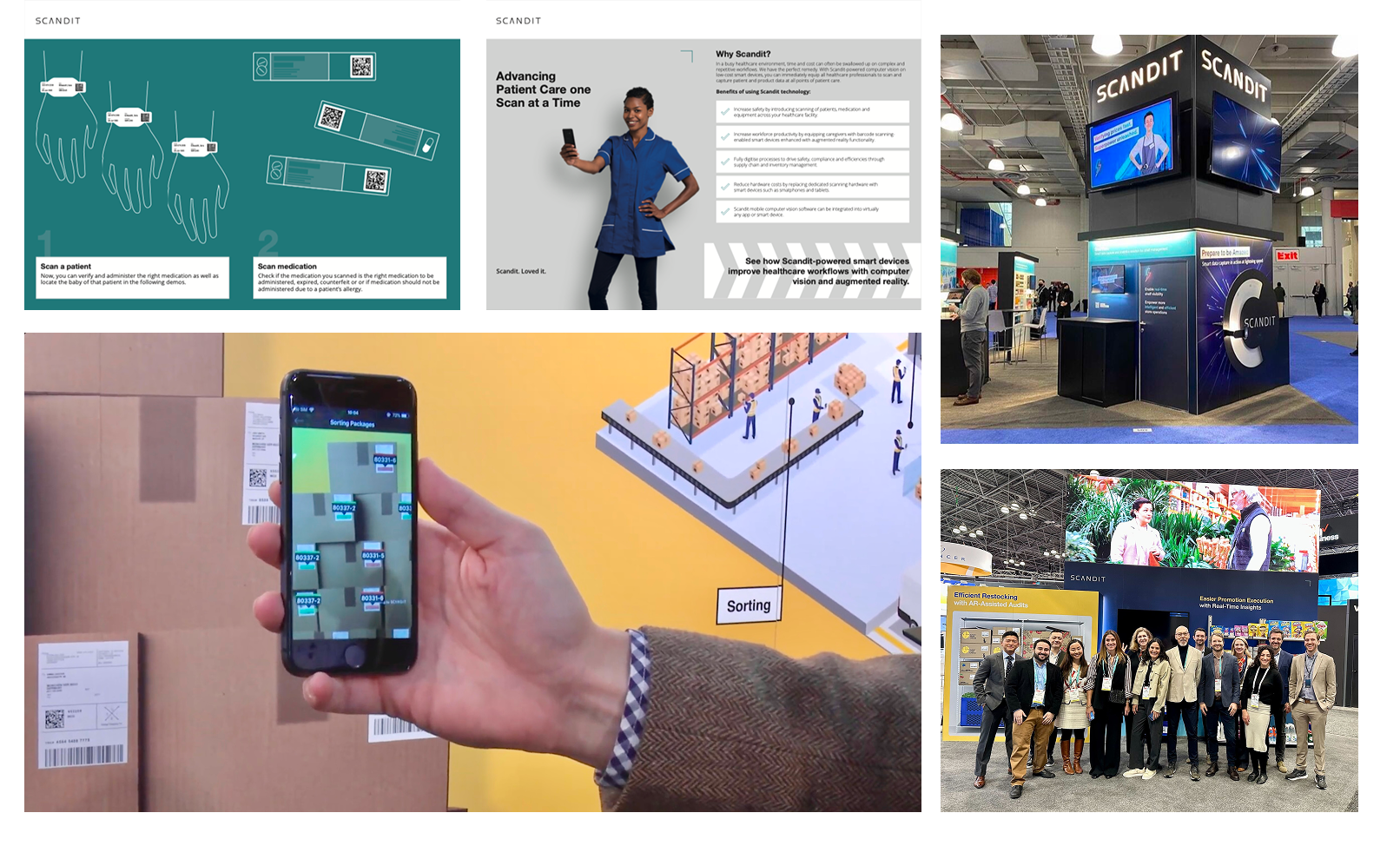
Interactive trade-show demos – walls you point at to scan products and see AR relevant to your industry. Among the most interactive demos on the show floor.

Demo books – let prospects capture their own setting, then scan, trigger AR, and see the info a worker sees, before testing it in their facility.

Demo apps – built closely with the PM, planning the best app experiences to show our capabilities, down to exactly what product info to surface for workers in retail, field service, and logistics.

Scandit demo experiences – interactive trade-show demos, demo books, and demo apps showing each persona's real workflow

Buyers could see themselves in the product – faster "aha", and sales couldn't live without these.

/11
Locatible
IoT GTM FROM ZERO · 2014–2017 · DUBLIN
Launches GTM Positioning Content & web Founder mode

A small Dublin startup with a new IoT product – pick one industry, then look bigger than you are.

Problem

Indoor-location IoT technology that could work across many industries. As a small startup out of Dublin, we needed focus, trust, and attention – without the size to command any of it.

Thinking

We started in healthcare, but the sales cycles were brutally long. So we switched to logistics. Then I built a GTM engine that made us read like a much bigger company than we were.

What shipped

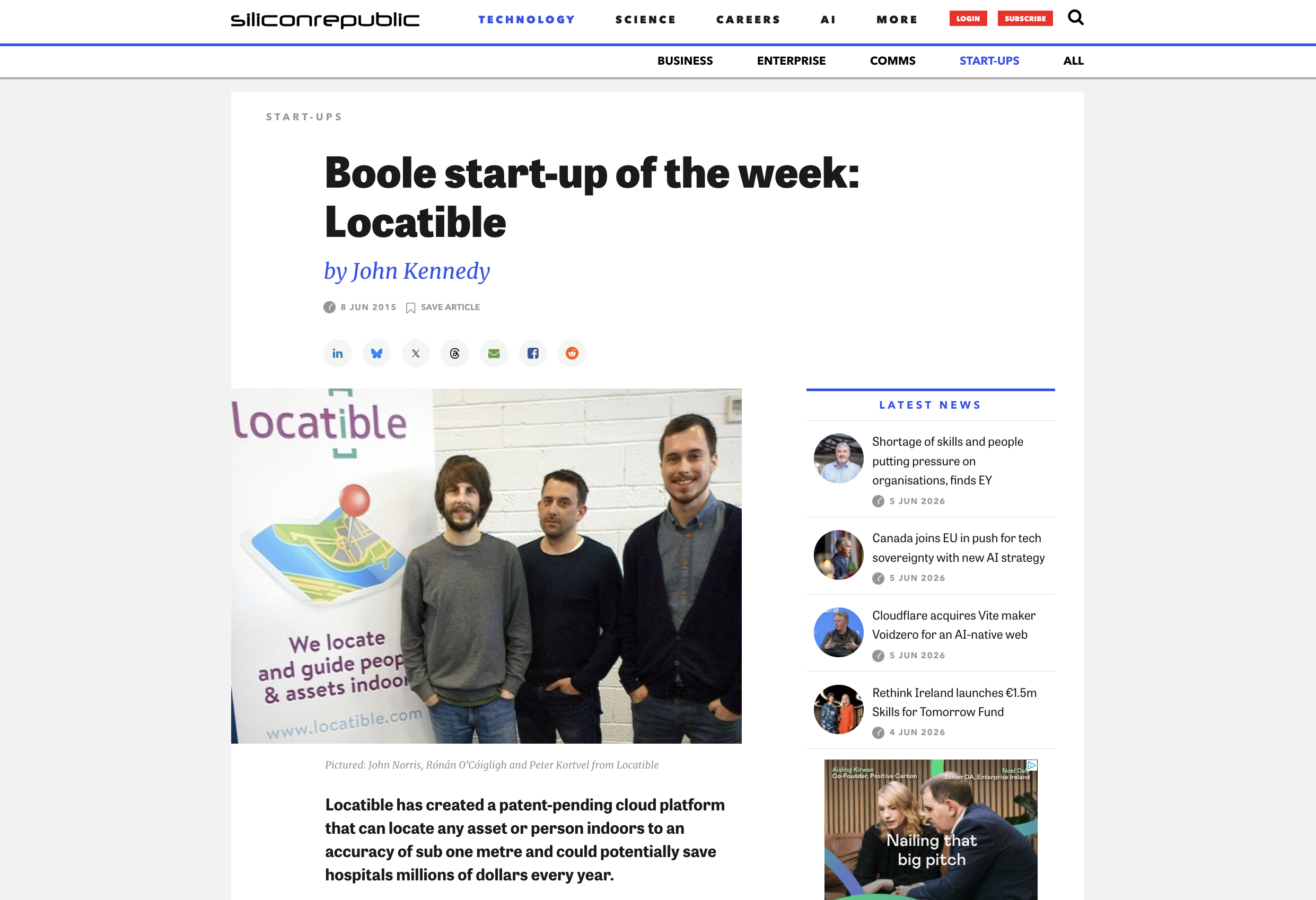
Started content and SEO very early – which paid off fast. Learned PR hands-on: small wins in Irish tech news first, then features in key logistics and IoT magazines whenever we had something to announce – Inbound Logistics, Supply Chain Digital, Supply & Demand Chain Executive, IoT Now.

Built an outbound system on the CRM and marketing automation. Wrote the value proposition, whitepapers, and ROI calculations. Pulled it all into a website and content engine.

Locatible featured across logistics and IoT news – Inbound Logistics, Supply Chain Digital, IoT Now

Landed a big logistics pilot with Whirlpool, run by Kenco – we came in with trust, attention, and a clear value story already in place. Then joined a U.S. accelerator.

/12
Upwordo
AI LANGUAGE APP · 2025–NOW · ZÜRICH
Launches AI-native Founder mode GTM Positioning

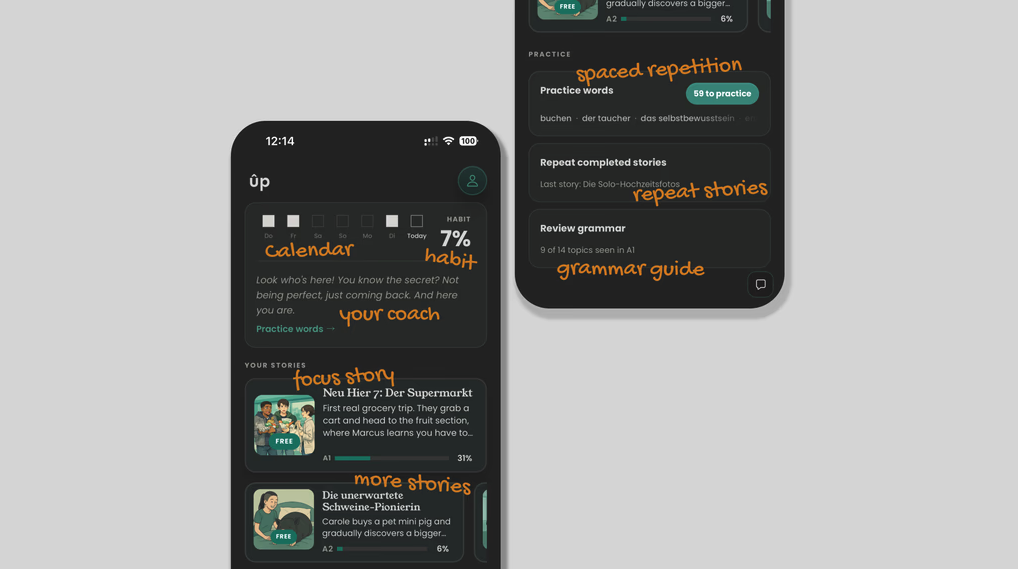
Language apps train adults to tap. We built one that teaches them German.

Problem

From talking to language learners, we recognized two key problem patterns. The gamified apps trained people to tap: streaks, hearts, gems, dopamine… and years in, they'd still freeze at the bakery. The story apps rely on reading longer texts – but focused practice is deprioritized, so people learn mostly passively.

Both types don't offer efficient learning for the time a learner spends on the phone – just the feel of learning.

Thinking

So we built the opposite. Learning in context, but with micro stories. The premise: you don't need much text to get the most out of learning. It's methodical but guided – a calm, minimalist experience.

The stories come from real news, written one CEFR level at a time through a multi-step, AI-assisted process – so they're interesting, factual, and use the right language. None of the AI slop and low-quality stories you find elsewhere.

Every story runs the same four steps. Read for comprehension. Meet the vocab. Pick up grammar phrases. Then write it back in your own words, with AI correcting you as you go.

We built unique list-based flashcards – nobody else has this on the market. And the spaced repetition is visualised simply.

What shipped

Product direction, UX, positioning, the AI content pipeline, the German story system, website, launch and GTM. Built in a team of three.

170+ stories live across A1–B2.

See it live: upwordo.com · open the app.

Upwordo – AI-native German learning app built around short stories for adults

Weekly podcast in the top 10 for German learning on Apple. 10k+ learners across the app, the podcast and the newsletter. Already dozens of paid app users, and highly positive feedback. One user wrote: “The best app for Deutsch lernen ever.”

/13
Recruiter (Within)
AI WORKFLOW · POSITIONING & BRAND · 2026 · ZÜRICH
AI-native Positioning Branding Content & web

An entire venture brand, from research to live site, built through one AI workflow I created – then handed off to run.

Problem

Embedded recruiting was proven abroad but unknown in Switzerland. A new venture needed the whole stack – category story, name, brand, site – built fast and lean.

How I built it

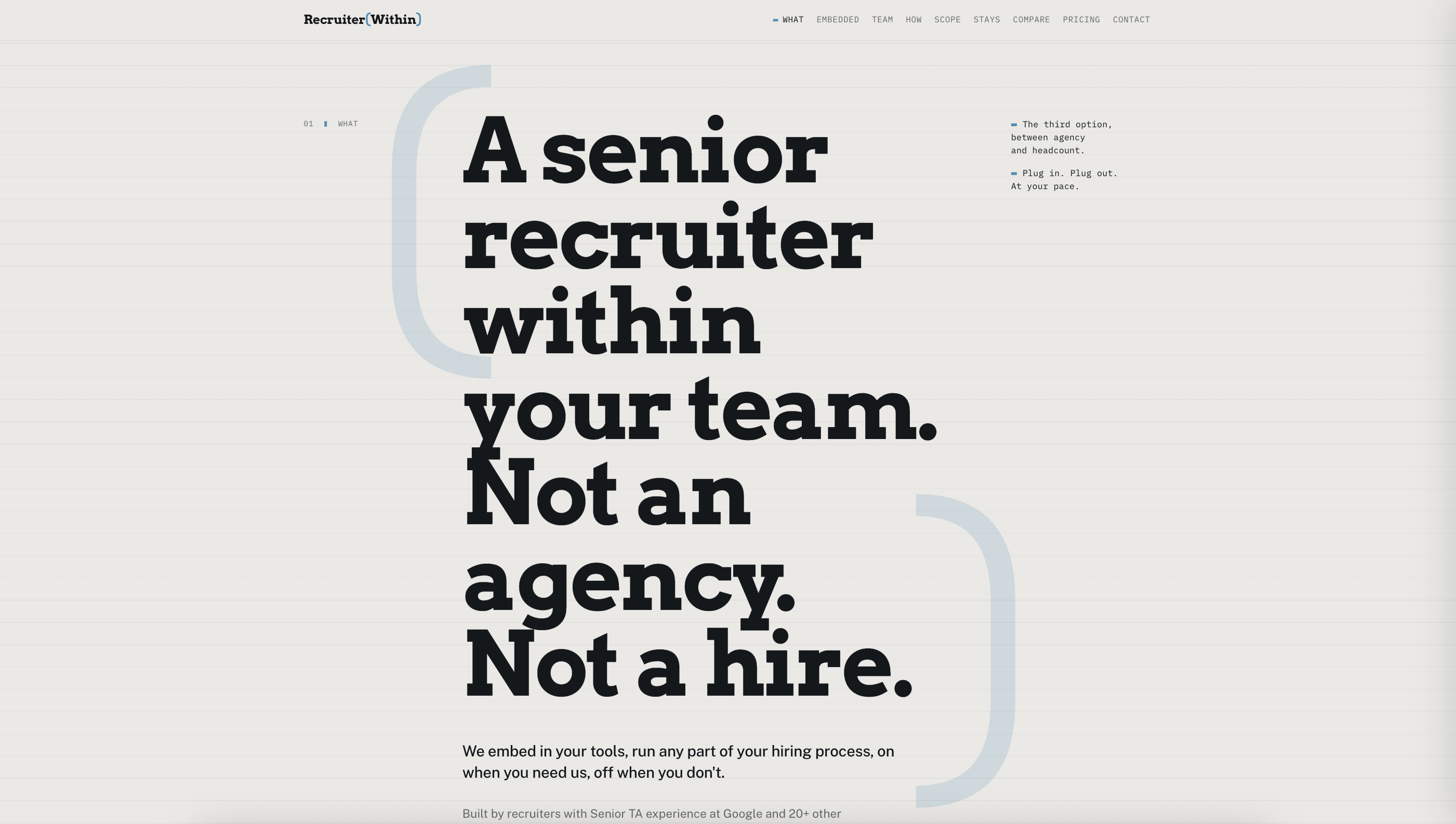
Research, positioning, naming, copy, design and the build all ran through one AI workflow I created – then handed off, so the team keeps producing without me.

Positioning

Named the third option – between an agency and a full-time hire – and kept the buyer's pain in view throughout. The category makes it click; the brand stands on what's harder to copy than a label.

Name & brand

Recruiter (Within) – memorable, ownable, and you read what it means at a glance. The parentheses became the brand mark.

The site

A longer read that teaches the model, at recruiterwithin.com.

Recruiter (Within) – an entire venture brand built through one AI workflow, with the parentheses as the brand mark

Live and ready for a 2026 launch – a full venture brand produced, and handed off, as a repeatable AI workflow.

/14
Fleming
CONTENT & EMAIL · 2013–2014 · BRATISLAVA
Content & web GTM

Cold email was dead. The fix wasn't a better cold email – it was something useful in the inbox.

Problem

Email campaigns going out cold to industry leaders – HR, finance, pharma, and more. Conversion stuck. Buyers ignored generic webinar pitches.

Thinking

Switched from "register for this webinar" to giving the value upfront. For each webinar, I worked with the speaker to put useful information right in the email – so people could experience the value before deciding to show up. Value first, ask second.

What shipped

Content strategy, 100+ campaigns, blog launch, infographics, webinar landing pages.

Tripled leads in the first month. Set the playbook that ran for two more years.

/15
Evolveum
SEO · 2017–2018 · BRATISLAVA
Content & web

Don't write more pages. Find the authority you already have, and point it at the right doors.

Problem

Niche identity & access management software (midPoint, open source). Deep technical content, low organic traffic. The team's instinct was to write more, faster.

Thinking

Audited what was already there. Their product wiki at wiki.evolveum.com sat on a subdomain and had quietly built strong domain authority over years – open-source IAM is a rare, deep niche, and that wiki had become a reference. But it barely linked back to the main site. The asset was already there. Use it.

Mapped the highest-intent keywords to pages on evolveum.com. Built internal linking from the wiki into those pages – the authority flowed where it could convert. Layered the rest on top: URL and meta restructure, Wikipedia references, Quora and StackOverflow answers, SlideShare decks repurposing existing content, technical PR.

What shipped

Keyword strategy mapped to pages, wiki-to-main-site internal linking, URL and meta restructure, breadcrumbs, off-page program (Wikipedia, Quora, StackOverflow, SlideShare, technical media).

Doubled website visits in three months. Ranked top 10 on priority keywords (incl. "open source identity management" at #5).

END

Got a problem worth solving?

Open to full-time, fractional, or consulting work. Based in Zürich.

Get in touch